Stinkbugs on Legume Vegetables
Return to insects
Stinkbugs (Euschistus sp., Halyomorpha halys, Chinavia hilaris). Several species of stinkbugs (as nymphs and adults) attack beans and feed on developing pods with their piercing-sucking mouthparts. Stinkbugs are recognized by their distinctive shield-shaped appearance. Stinkbug nymphs, which have short wing pads, may be more common than adults in legumes. Feeding by stinkbugs can leave a ‘sting’ at the feeding site on bean pods and discolored spots on the seeds. When disturbed, stinkbugs release an odor similar to that of cilantro. Green stinkbug is the most common type in legume vegetables, while the brown marmorated stinkbug is a new invasive pest that is rapidly expanding its range in Kentucky. Several species of brown stinkbugs are plant-feeding pests; they are similar in appearance to spined soldier bugs, which are beneficial natural enemies of insect pests. The spined soldier bug has small black marking at the tips of the front wings.
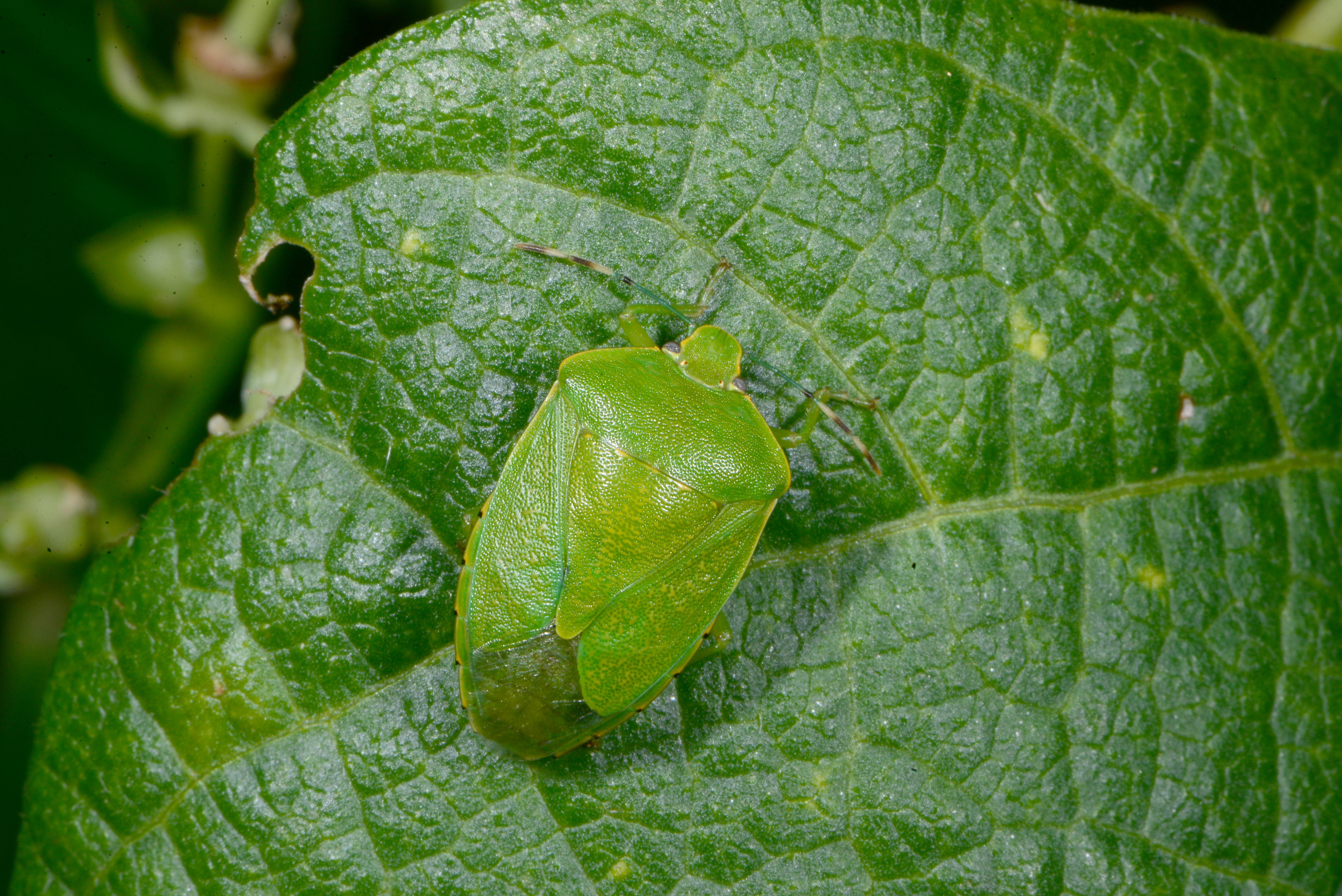
Green stinkbug
(Photo: Ric Bessin, University of Kentucky)
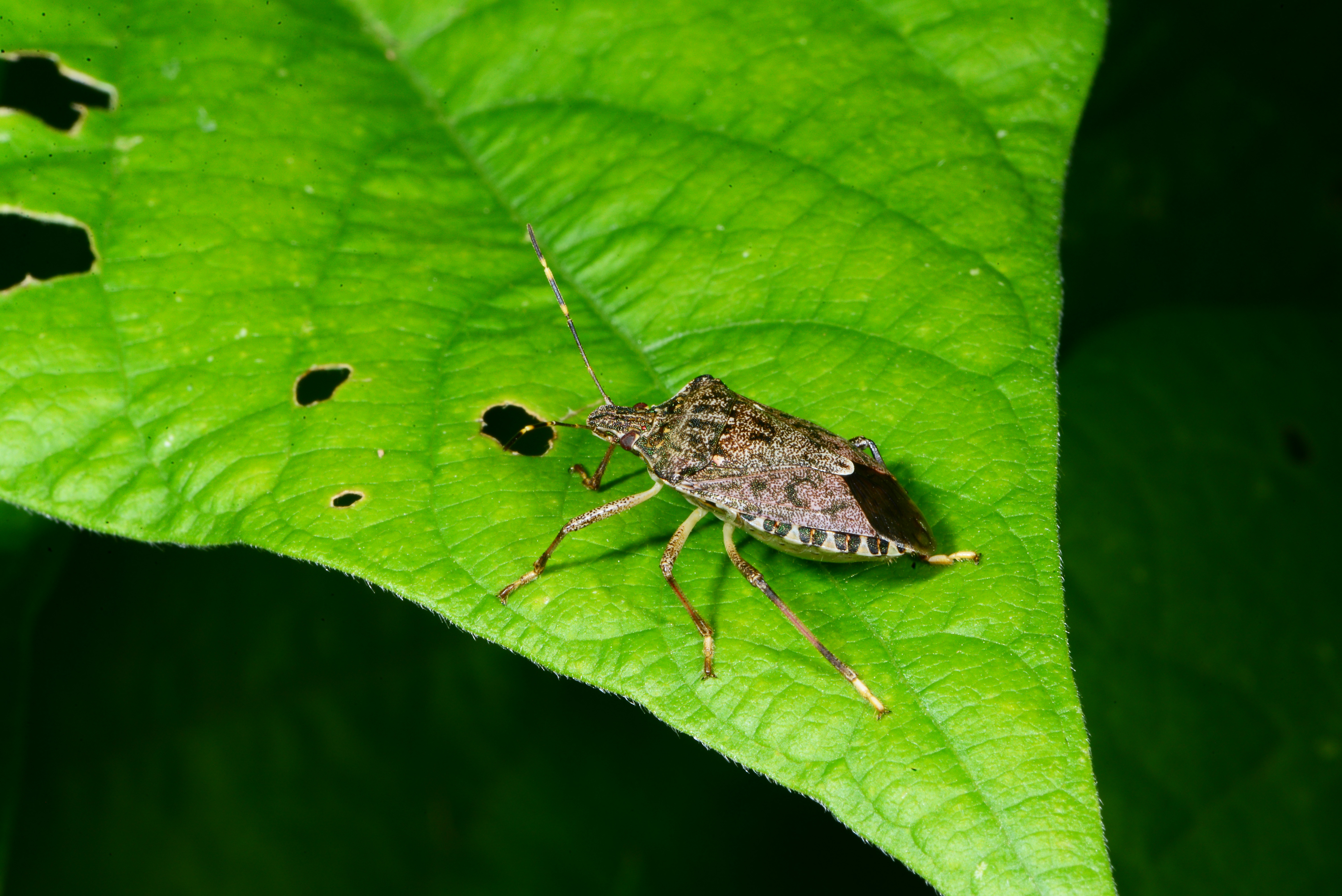
Brown marmorated stinkbug
(Photo: Ric Bessin, University of Kentucky)
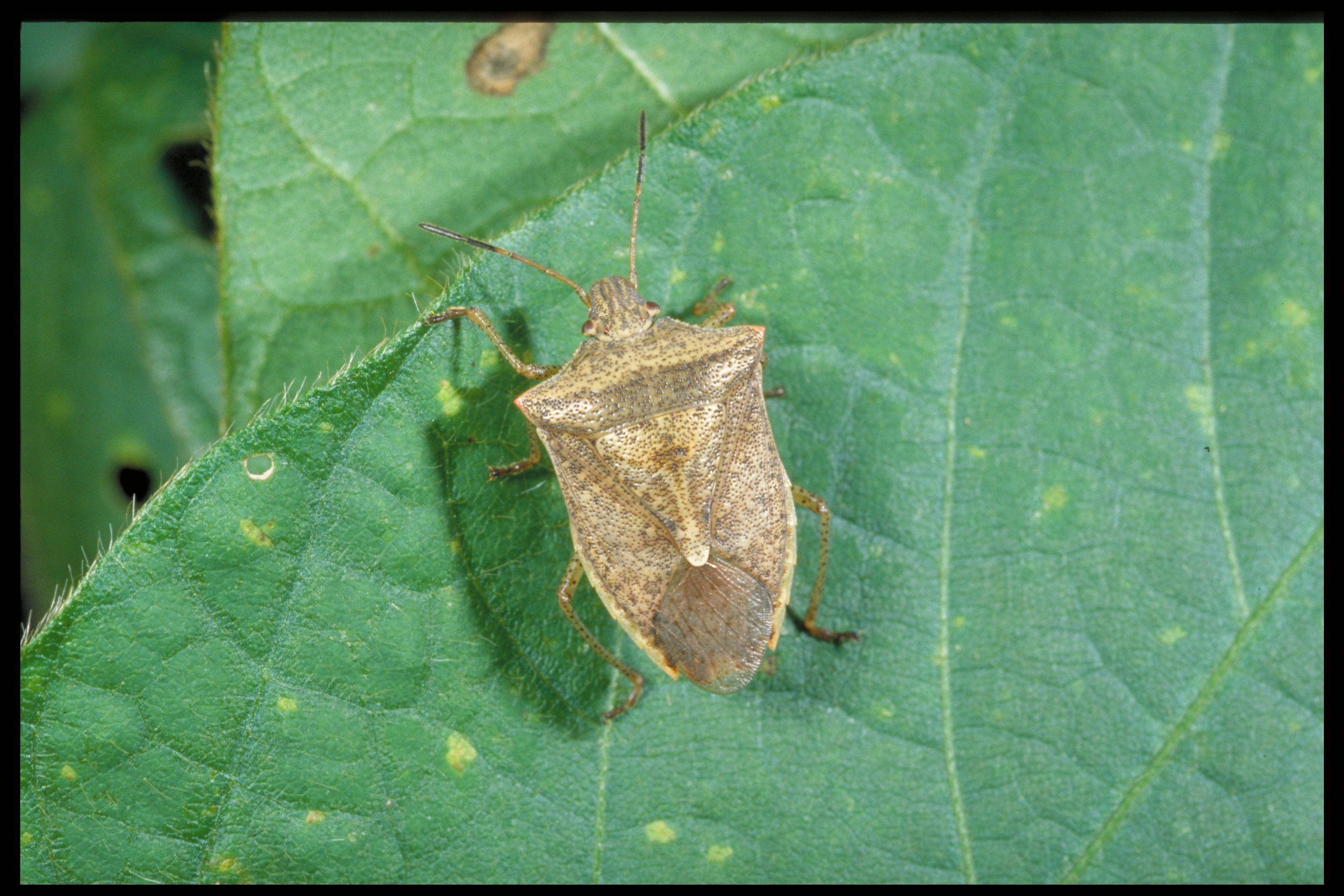
Brown stinkbug
(Photo: Ric Bessin, University of Kentucky)
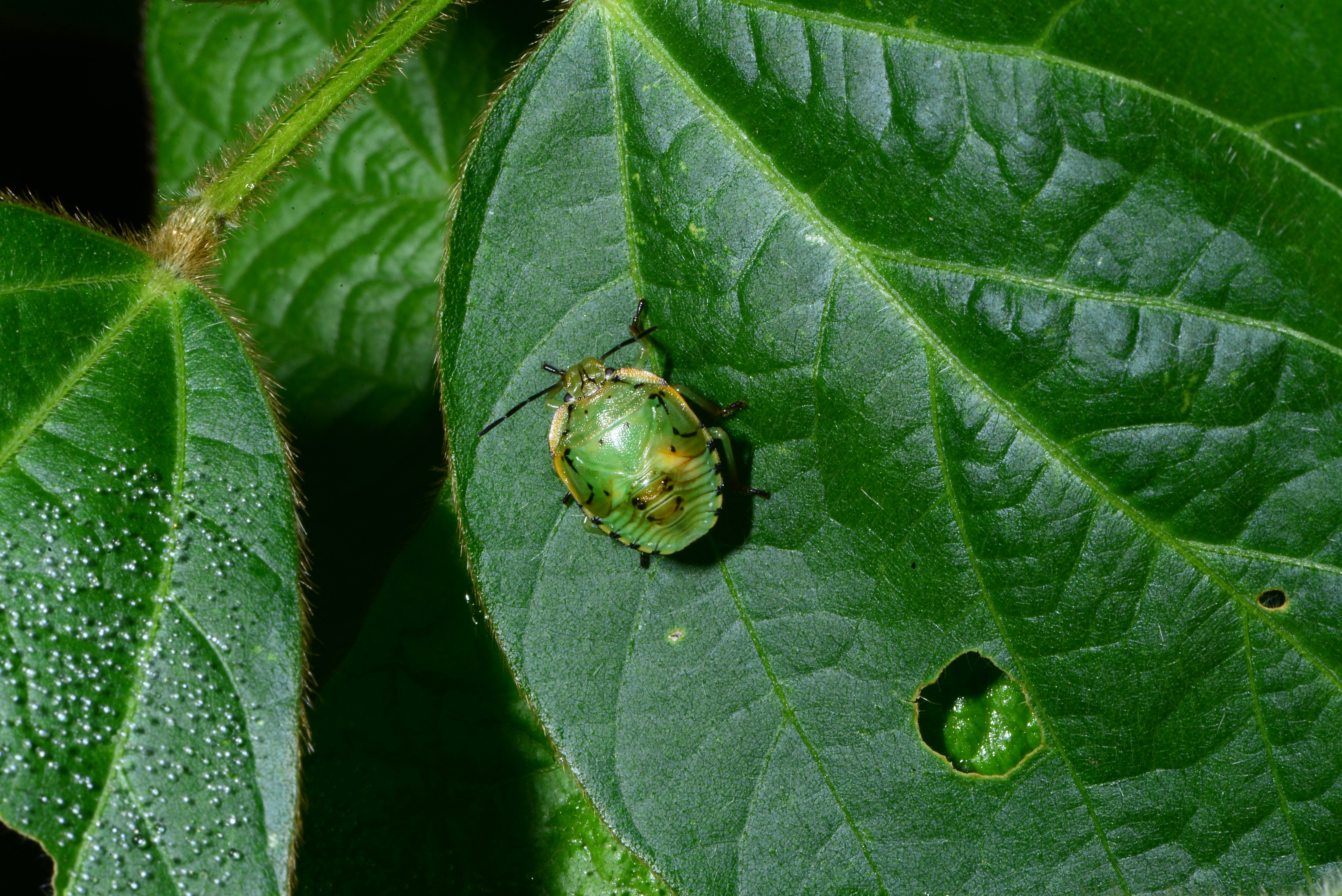
Stinkbug nymph.
(Photo: Ric Bessin, University of Kentucky)
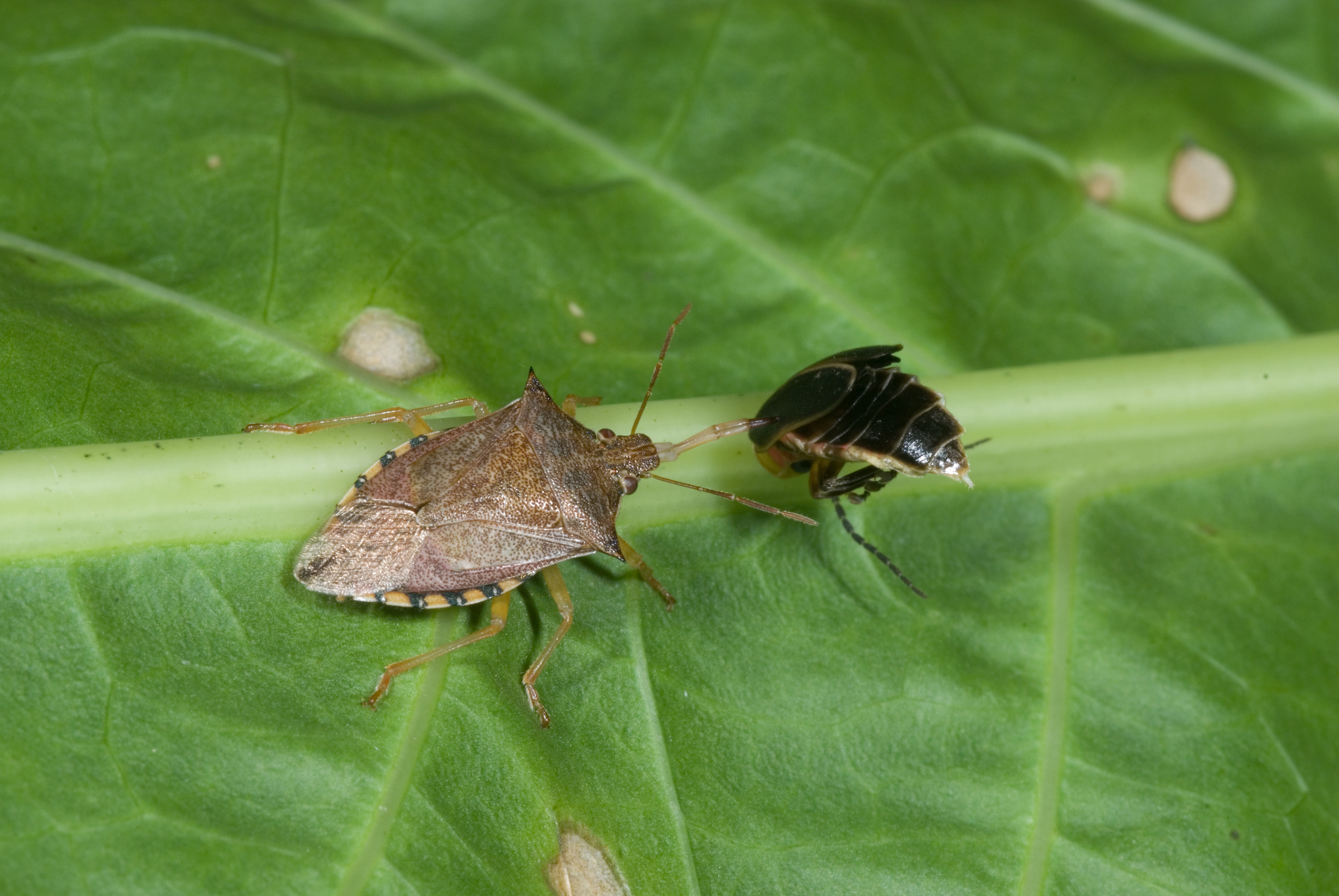
The spined solider bug is a beneficial stink bug.
(Photo: Ric Bessin, University of Kentucky)
Management:
- Monitor for stinkbugs beginning in mid-summer and control with insecticides as needed.