Yellow Nutsedge in Legume Vegetable Plantings
Return to weeds
Yellow nutsedge (Cyperus esculentus) is an erect, perennial member of the sedge family often confused for a grass. The leaves arise from a central triangular stem to form a clump that grows 1 to 3 feet high. Leaves are up to ½ inch wide, yellow-green, smooth, and shiny on the upper surface. While it can reproduce from seed, underground tubers that form at the end of each rootlet are the primary means for reproduction.
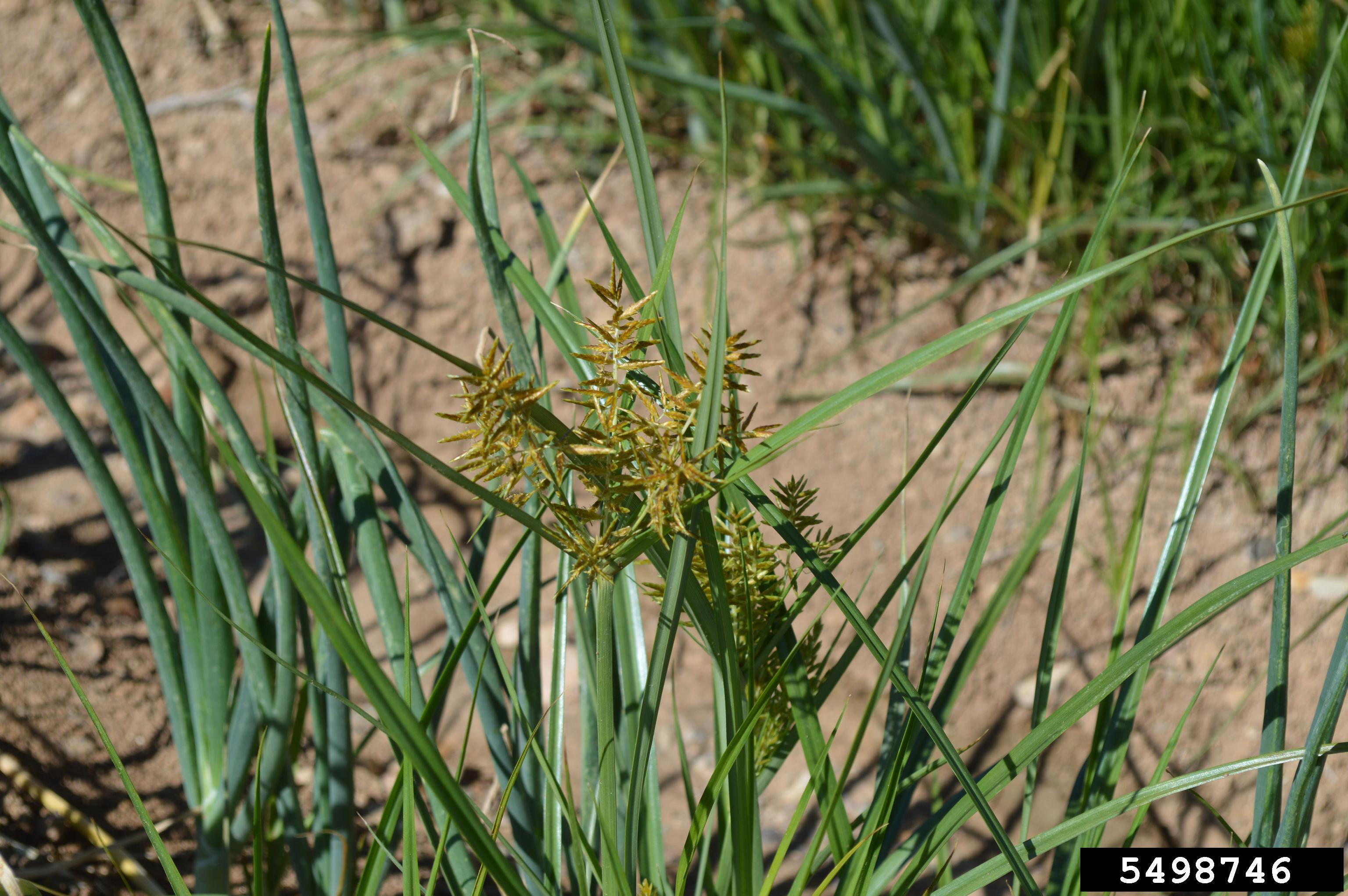
Yellow nutsedge in bloom.
(Photo: Howard F. Schwartz, Colorado State University, Bugwood.org)
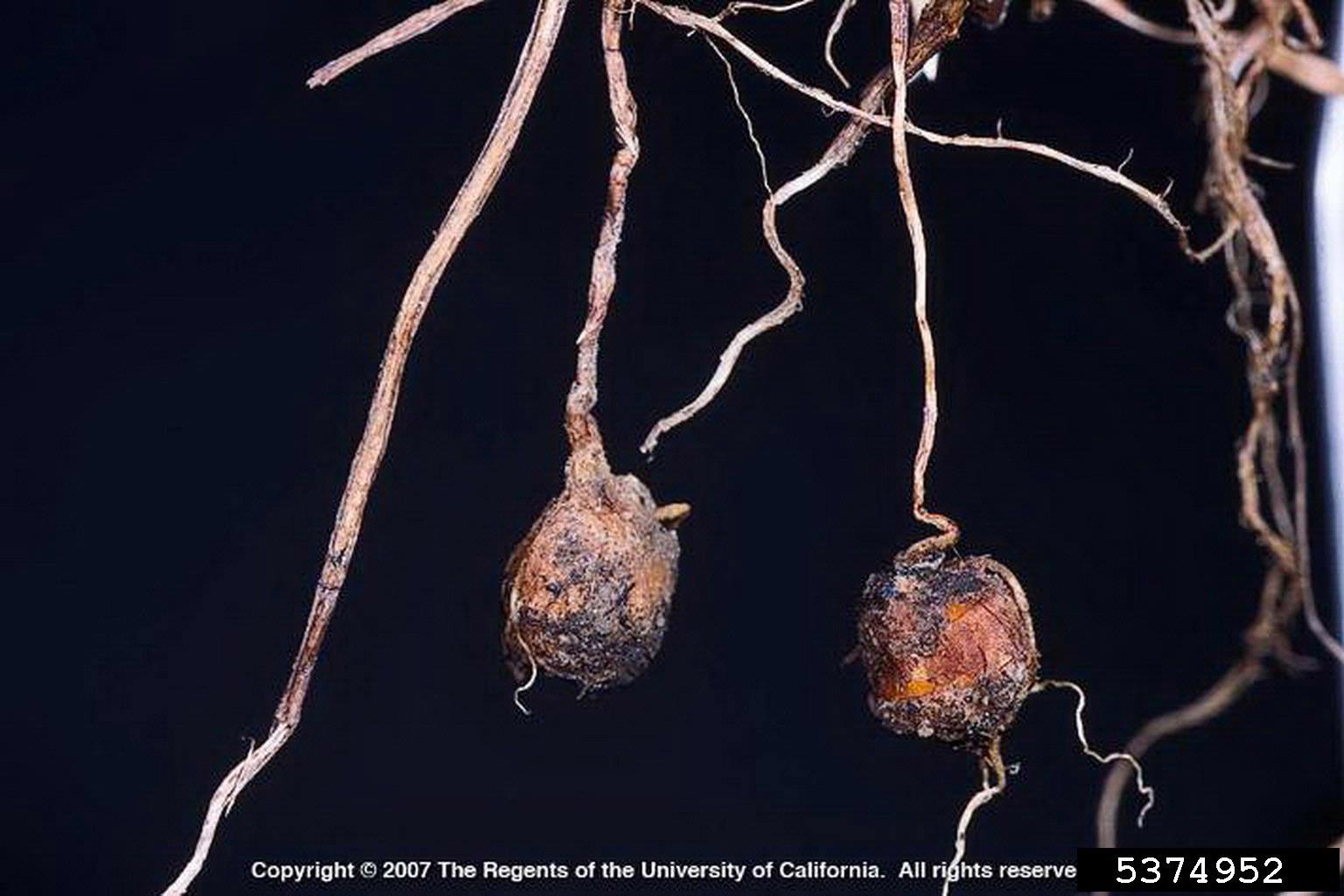
Yellow nutsedge tubers.
(Photo: Joseph M. DiTomaseo, University of California-Davis, Bugwood.org)
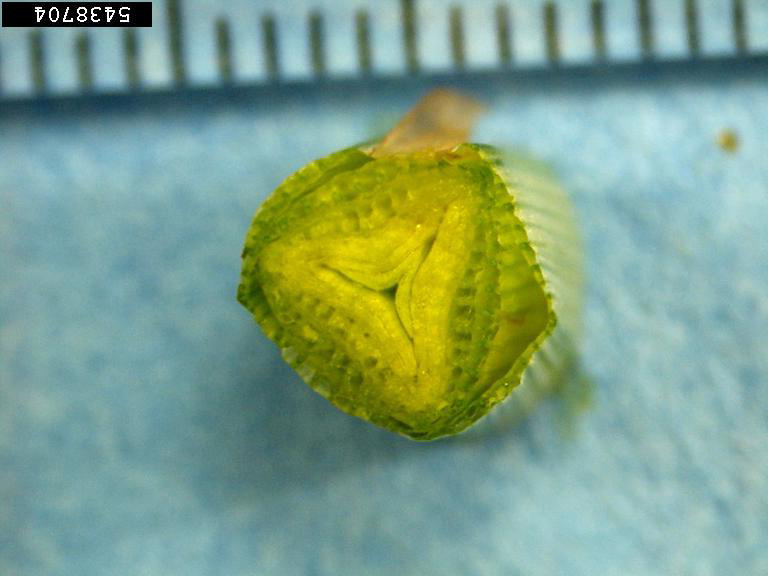
Stem cross section- notice the triangular shape.
(Photo: Bruce Ackley, The Ohio State University, Bugwood.org)
Management:
- Because the tubers can be spread by cultivation, it is important to work infested field areas last to avoid spreading them.
- Herbicides for grasses are ineffective on this plant because it has a different physiology than a grass.
- Contact herbicides can be used to suppress nutsedge; a dense plant canopy will also help to suppress it.
- A few pre-emergent herbicides are effective.